Maths has always seemed like this huge mountain students have to climb – full of tricky numbers and scary equations. What if we could flip that around? Imagine if maths turned into a fun playground, a place for curiosity and exploration. Especially for kids in government schools – where resources can be tight – changing how we teach maths could really make a difference. That’s where some creative tools and techniques come in, which can make learning maths enjoyable and spark a passion for numbers in young minds.
At Peepul, we’re all about improving education in schools. We understand how vital it is to create learning experiences that grab students’ attention. By altering and fine-tuning traditional teaching methods, we can tap into each student’s potential.
So, let’s dive into some simple but powerful ideas to make maths not just accessible, but also fun!
How to make maths fun – simple yet effective ideas
Many students often think – how to like math? Maths doesn’t have to be a scary subject that students dread. As a children education NGO in India, we genuinely believe that every kid can find joy in maths if it’s introduced in a fun and engaging way. While working in government schools, we’ve stumbled upon some methods that really change the game, turning maths from something that has to be done as a part of the curriculum, into something that kids are excited about.
We are happy to share some fun ways to teach maths in government schools as well as private ones.
- The power of play in mathematical learning
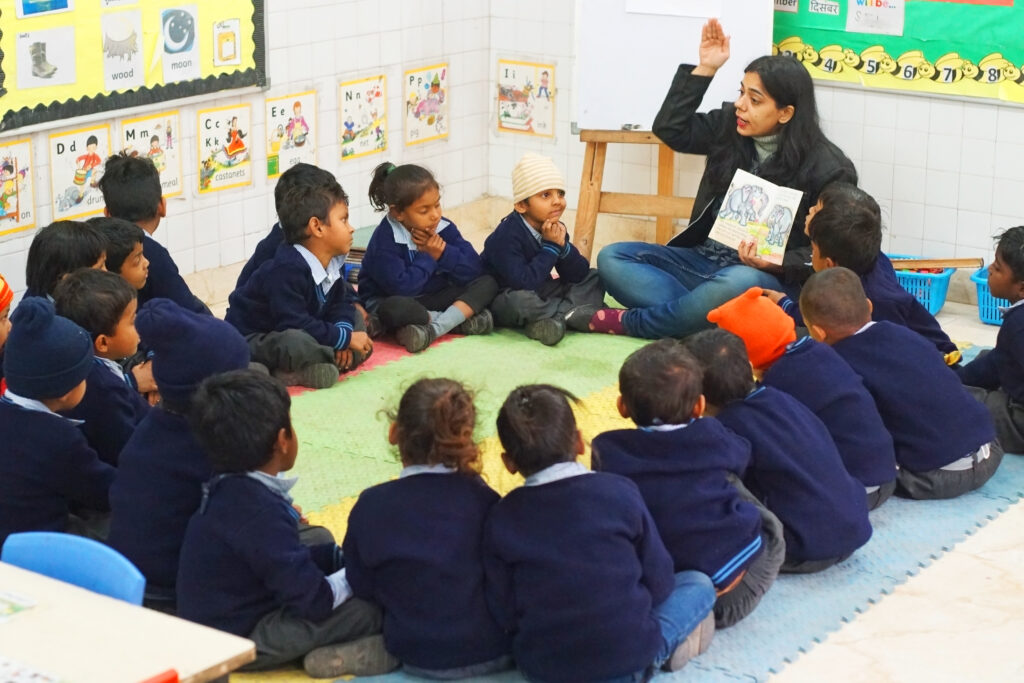
Picture this: a classroom buzzing with laughter as kids tackle equations together, or multiplication tables turned into a lively group game. This is actually happening in some government schools where teachers are getting creative with their teaching styles. When kids start linking maths with fun, it’s like flipping a switch; their curiosity kicks in, and suddenly, learning feels like a breeze.
- The maths Toolkit: your companion for creative teaching
A maths Toolkit is like a treasure chest for teachers, packed with resources that turn maths from a dry subject into something lively and engaging. It’s the answer to – how to make maths easier?
- Number games and manipulatives – Think about using counting beads, pattern blocks, or number cards. When students get to physically move things around, they’re not just solving problems on paper; they’re truly understanding what addition, subtraction, and grouping mean.
- Geometry made fun – Whether it is by creating geometrical patterns or solving problems including shapes and sizes, these tool kits often contain geometry-based resources that tend to tickle young and curious brains, drawing their attention to the wonders of shapes.
- Visual learning tools – Using bright charts, diagrams, and pictures can help learn tricky concepts. You might create a number wall for students to see how numbers relate or use geometric shapes to weave stories. These visual aids are fantastic for helping kids remember ideas better and see the connections between different math concepts.
- Building teacher confidence
At Peepul, we understand that teachers often need a little extra support when it comes to putting these creative methods into action. Peepul’s teacher training programs in India are designed to help teachers in several key ways:
- Get a grip on innovative teaching techniques.
- Build confidence, especially when it comes to using the mathsToolkit.
- Learn how to whip up engaging lesson plans that capture students’ attention.
- Get a handle on understanding the different ways kids learn.
- Adapt activities to fit various skill levels.
- Interactive teaching strategies
- Group activities that spark joy – Break the students into small groups for some fun maths games and competitions can actually stir things up. Activities like “Maths Relay” or “Number Detective” can get them working together and help them understand those math concepts. Apart from math, these activities nurture team skills too!
- Movement-based learning – Children love moving around, period! Imagine this – kids learning about addition using a huge board of Snakes and Ladders. Or using Hopscotch to learn skip counting. They could use their bodies to create all sorts of geometric shapes. Mixing physical activity with maths works wonders.
- Real-world mathematics – The basic idea behind teaching children maths is to make them understand the real-world applications. Imagine this – One student playing the role of a shop keeper, and the other one a customer who has come to buy something. This could be a great way to make a story problem on addition and subtraction come alive!
- Creating a supportive learning environment
- Celebrate progress, not just perfection – It’s important to build a classroom where mistakes aren’t seen as failures but rather as chances to learn. The idea of “productive struggle” is really neat – students can understand that tough problems actually make their brains stronger.
- Peer learning and support – Encourage kids to explain things to one another. When they teach their classmates, they’re not just helping others out; they’re also solidifying their own understanding. This again brings in value-based learning and life-skill development.
- Technology integration
Integrating technology not only makes lessons more engaging but also gets students ready for the digital world that awaits them. For instance, using mobile phones for fun math games, or creating some simple PowerPoint presentations. There are also many free educational apps that can make learning more interactive and help teachers figuring out how to teach maths in an interesting way.
- Assessment through play
Evaluation doesn’t have to be stiff and stressful. By weaving in games and activities, we can turn assessments into a positive experience. Try some of these creative options –
- Maths scavenger hunts
- Problem-solving competitions
- Project-based assessments
- Peer evaluation games
- Portfolio development
Peepul – transforming the way children learn, and teachers teach
To make maths fun in government schools we must embrace creativity and a bit of enthusiasm. It’s not just about academic scores; it’s about making maths fun and easy to grasp. This way, we’re not only boosting performance but also raising a generation of confident problem-solvers who actually see maths as something useful and enjoyable in their lives. So, here at Peepul, we’re calling on all educators, parents, and community members to come together and shake things up in maths education in government schools. Just imagine – creating spaces where every child can find joy in maths and build the skills they’ll need to succeed in the future.
By using some simple yet powerful strategies, we can truly transform maths education in government schools and help each child unlock their full mathematical potential. Donate for child education and save tax – let’s do this together!