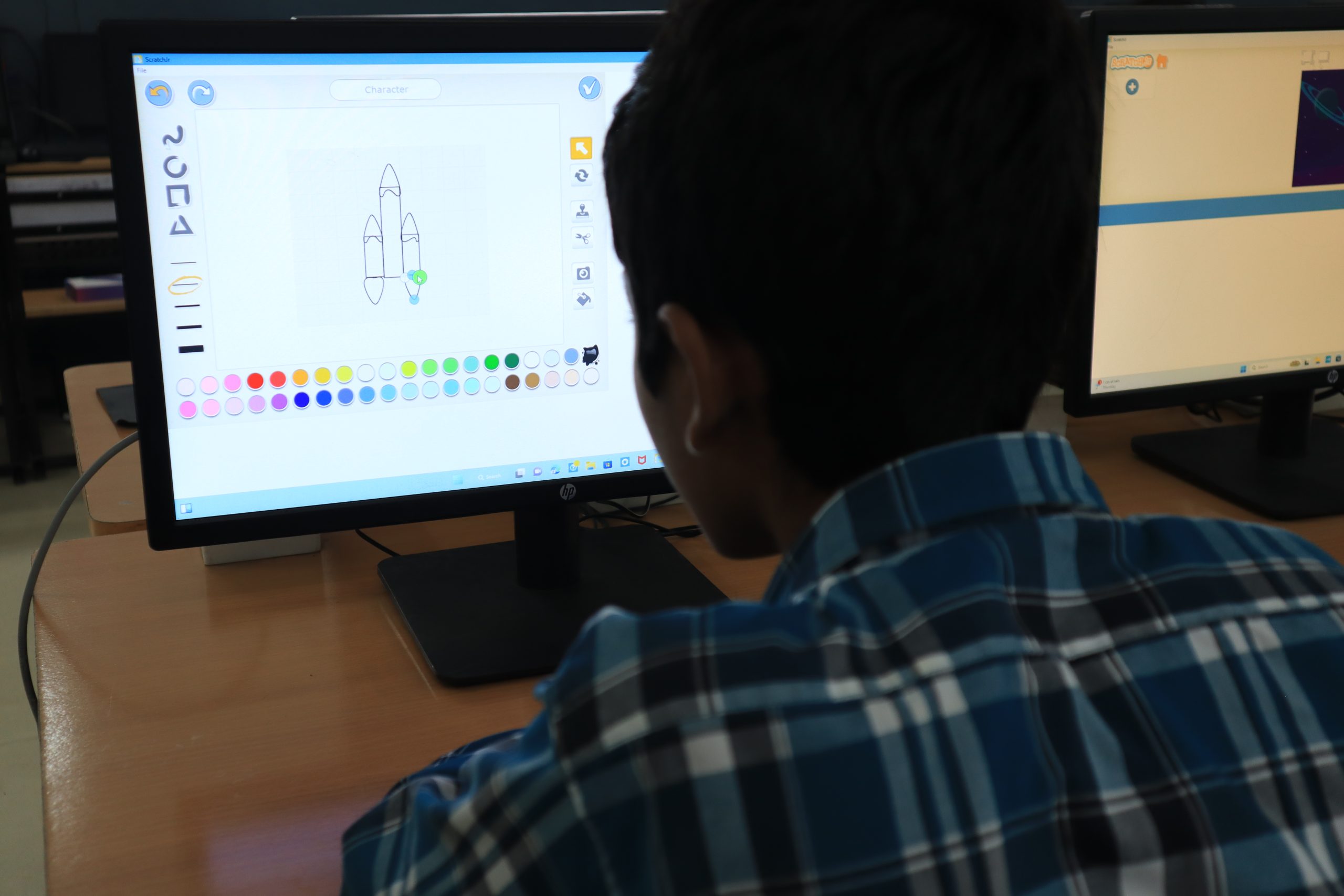
Artificial Intelligence is no longer a distant concept; it is rapidly becoming part of everyday learning. From lesson planning to personalised assessments, AI in Indian classrooms is set to redefine how children learn across the country.
Starting from the 2026–27 academic year, India plans to introduce AI education as early as Class 3, marking one of the most ambitious shifts in the future of education. On paper, the vision is transformative. But inside thousands of government school classrooms, a more urgent question is emerging: Are teachers ready for this shift?
Efforts led by Peepul, working as an education NGO in India, are already showing how structured teacher support can bridge the gap between policy ambition and classroom reality.
Because while policies can mandate change, classrooms rely on people to implement it. And for millions of educators navigating large class sizes, limited digital infrastructure, and evolving expectations, the transition to AI-enabled teaching is not just about adopting new tools; it’s about rethinking the very way teaching works.
This National Technology Day, the focus shouldn’t just be on what AI can do for students. It should be on what it demands from teachers and whether our systems are ready to support them.
From Policy to Practice- India’s Big AI Education Push
India’s move to introduce AI learning from Class 3 under the NEP 2020 vision signals a major shift toward preparing students for a technology-driven future. The goal is not just digital exposure, but building early familiarity with problem-solving, logic, and computational thinking.
At a policy level, the intent is clear: AI should become as foundational as reading and mathematics.
What the Policy Aims to Achieve:
- Introduce AI concepts at an early age (from Class 3 onwards)
- Build future-ready skills aligned with global workforce demands
- Integrate AI tools into everyday classroom teaching
- Enable personalised and adaptive learning experiences
However, the scale of this ambition is unprecedented.
- India has over 10 million (1 crore+) school teachers
- Nearly 70% of students are enrolled in government schools
- A significant proportion of these schools are still building basic digital infrastructure
The challenge, therefore, is not policy design: it is execution. Because transforming the future of education in India depends on how effectively teachers can translate this vision into classroom practice.
Why Teacher Readiness Matters More Than Technology
In conversations around government school digital education, the focus often lands on infrastructure: smartboards, tablets, and internet access. But access alone does not guarantee learning.
A classroom with devices but without confident teachers risks becoming a space where technology exists, but is not meaningfully used.
Why Teacher Readiness is Critical:
- AI tools require pedagogical understanding, not just technical usage
- Teachers must interpret AI-generated insights to support students
- Classroom management changes when technology is introduced
- Students rely on teachers to guide responsible and ethical AI use
Without adequate preparation, AI can:
- Increase confusion instead of clarity
- Widen learning gaps between students
- Become underutilised or misused in classrooms
Recent estimates suggest that only around 15% of educators are currently AI-fluent (2025 surveys), highlighting a significant readiness gap.
This makes one thing clear: Technology can enter classrooms overnight. Teacher readiness cannot.
Preparing 10 Million Teachers for a New Era
The scale of teacher preparation required is one of the largest challenges in India’s education transformation. Training over 10 million teachers is not just a logistical task; it is a systemic shift.
Key Challenges in Teacher Training for AI:
- Scale vs Quality
Large-scale training programs often prioritise reach over depth
- One-Time Workshops vs Continuous Support
Short sessions fail to build long-term confidence
- Digital Divide Among Teachers
Many educators are still adapting to basic digital tools
- Lack of Contextual Training
Generic modules do not reflect real classroom conditions
The Digital Literacy Programme, led by Peepul in collaboration with government stakeholders, works on transforming digital literacy in the classrooms of government schools.
Working with schools, we have found that the quality of education can increase rapidly if teachers implement the ideas better. However, implementing takes a lot more than just training.
Here is a table to understand how different aspects of improvement can picture AI-enabled classrooms.
| Aspect | Current Reality | AI-Enabled Classroom Expectation |
| Digital Literacy | Basic or limited in many regions | Confident use of multiple digital tools |
| Teaching Methods | Traditional, textbook-driven | Interactive, tech-integrated pedagogy |
| Assessment Approach | Standardised testing | Data-driven, personalised evaluation |
| Teacher Training | Periodic workshops | Continuous, hands-on learning |
| Classroom Environment | Large, resource-constrained | Adaptive, tech-supported learning spaces |
Bridging this gap requires more than training; it requires rethinking how teachers learn, practice, and evolve.
Lessons from the Ground- What Teacher Training Programs Are Revealing
Peepul works directly with government systems in Delhi & Madhya Pradesh. On-ground experience from working closely with government schools shows that teacher transformation is possible but only when training is practical, continuous, and context-driven. Programs implemented across Delhi and Madhya Pradesh have revealed important insights.
What Actually Works:
- Practice-Based Learning
Teachers learn better by doing, not just listening
- Ongoing Mentorship
Regular coaching builds confidence over time
- Classroom-Relevant Tools
Training must align with real constraints, large class sizes, and limited devices
- Peer Learning Communities
Teachers improve faster when they learn from each other
- Focus on Pedagogy First, Technology Second
Strong teaching practices make technology more effective, not the other way around
Observable Impact from Structured Teacher Support:
- Improved classroom engagement
- Better student participation
- More consistent use of digital tools
- Increased teacher confidence in adopting new methods
These insights reinforce a critical idea:
Teacher readiness for AI education is not about mastering technology; it’s about strengthening teaching itself.
What Needs to Change? Rethinking Teacher Training for the AI Age
If AI is to succeed in classrooms, teacher training systems must evolve just as rapidly as the technology itself.
The shift required is not incremental; it is fundamental.
What the System Needs to Prioritise:
- Continuous Professional Development
Move from one-time workshops to ongoing learning journeys
- Blended Training Models
Combine in-person coaching with digital learning tools
- Context-Specific Training
Design programs for real government school environments
- Stronger School-Level Support Systems
Enable headteachers and mentors to guide implementation
- Focus on Confidence Building
Teachers must feel capable, not overwhelmed
India’s AI education push has the potential to redefine learning for millions of children, but only if teachers are prepared to lead that change. This National Technology Day, the conversation must go beyond innovation and focus on enablement.
If you want to support meaningful change at scale, consider how you can donate for education in India and contribute to programs that equip teachers with the skills, confidence, and tools they need. Because transforming classrooms doesn’t begin with technology, it begins with the teacher.
FAQs
Q: From which class will AI be taught in Indian schools?
As per NEP 2020 and the revised National Curriculum Framework, AI-related concepts, including computational thinking and data literacy, are planned to be introduced from Class 3, beginning the 2026–27 academic year.
Q: How many teachers in India need to be trained for AI education?
India has approximately 10 million school teachers. Given that only 15% are currently AI-fluent (2025 survey data), an estimated 8 – 8.5 million teachers will need structured training and capacity-building before AI can be meaningfully taught in classrooms.
Q: Are government schools included in the AI curriculum rollout?
Yes. The policy is universal and applies to all schools +: government and private. However, the readiness gap is significantly wider in government school digital education contexts, where infrastructure, training access, and digital confidence are lower.
Q: What is Peepul doing about teacher readiness for AI?
Peepul, as an NGO for education in India, works directly with government school teachers in Delhi and Madhya Pradesh on structured professional development. While AI-specific training is an evolving area, Peepul’s model of embedded, contextually relevant, at-scale teacher training is directly transferable to AI education readiness.
Q: How can individuals or organisations support this effort?
Individuals can donate to quality education through organisations like Peepul that directly work with government school teachers. CSR partnerships and government collaborations are also critical pathways.