Across India, millions of children are the first in their family to attend school. For many of them, everything they learn about reading, writing and numeracy begins and often remains within the classroom.
This is the reality for millions of first-generation learners across India, children whose parents never had the opportunity to study, and who are the first in their family’s history to walk this path. For these children, the classroom plays an especially important role. It is where they develop foundational literacy and numeracy, build confidence as learners and discover new ways of thinking about the world.
Why Does Generic Pedagogy Fall Short? What Do We Mean by a ‘Structured Toolkit’?
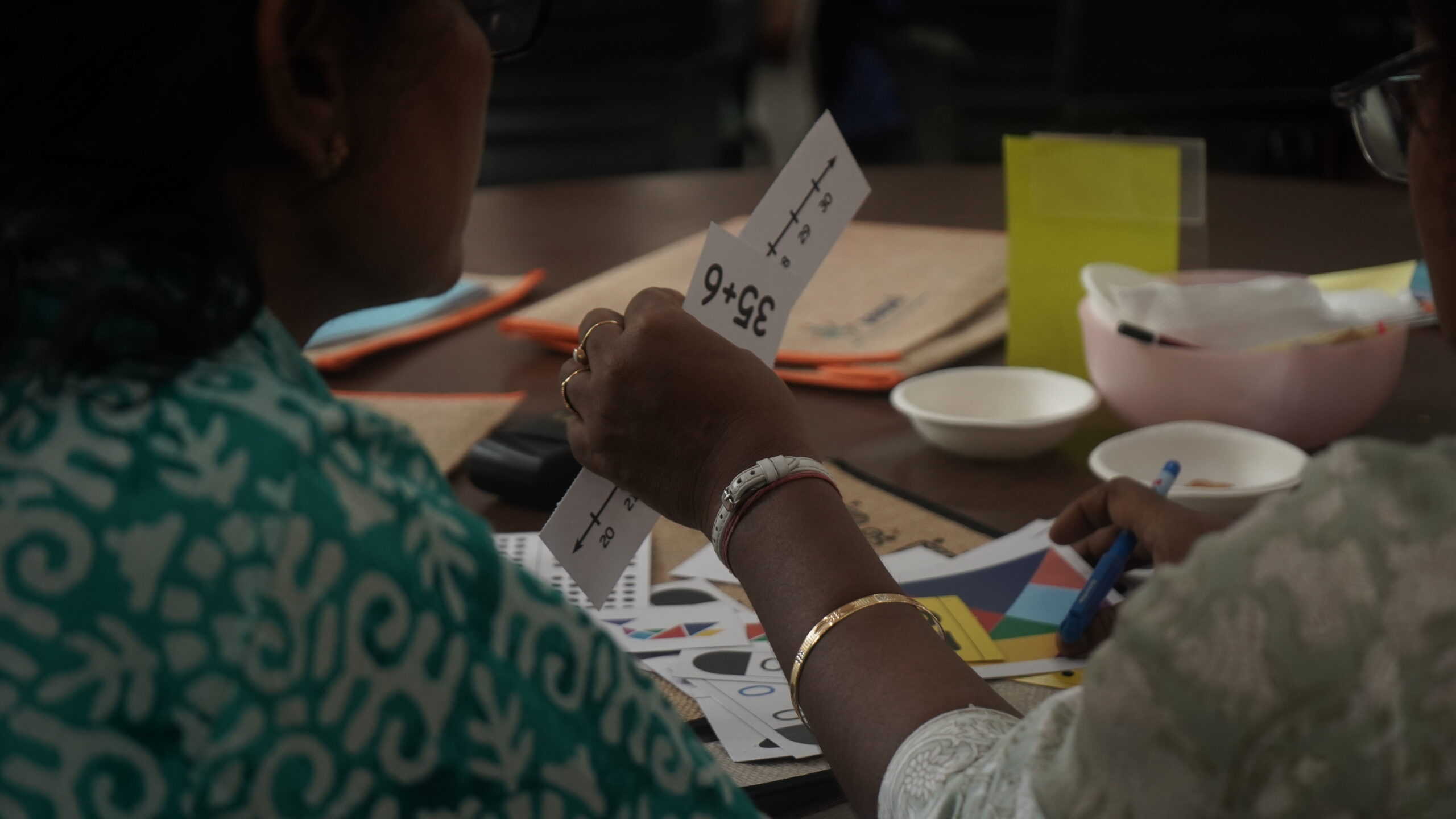
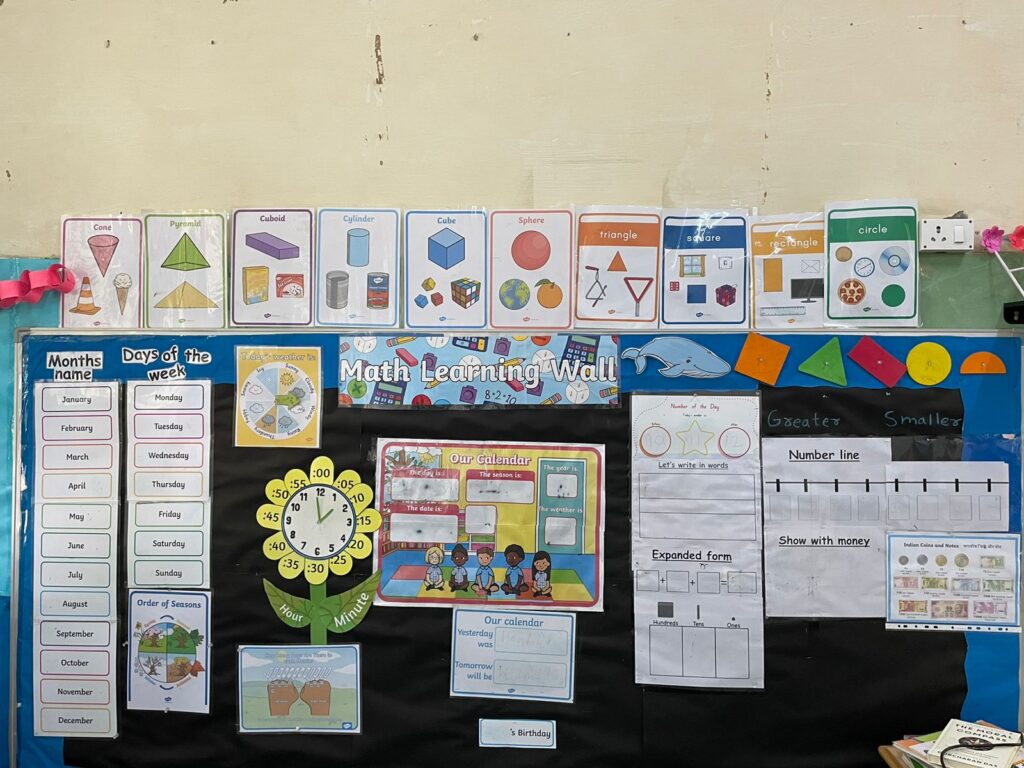
A structured toolkit is not a textbook, and it is not a vague teaching philosophy. It is a contextualised, sequenced set of classroom learning resources, often built around foundational Hindi literacy, math, or phonics, that tells a teacher exactly what to do, in what order, with what materials, and how to check whether it has worked.
Where generic pedagogy leaves the ‘how’ up to interpretation, a good toolkit makes the how explicit:
- A clear sequence of steps. Foundational literacy toolkits break reading down into its smallest components, sound recognition, blending, decoding, and fluency, and sequence them so a child builds mastery brick by brick, instead of being expected to leap straight to comprehension.
- Contextualisation to the child’s world. Effective phonics and math packages are built around language, examples, and cultural references that a child from a government school actually recognises, not imported frameworks designed for a different context altogether.
- Embedded checks for understanding. A well-designed toolkit does not wait until the unit test to find out that a child is lost. It builds in constant, low-stakes checks, quick questioning, cold calling, and wait time, so a teacher can catch a gap the same day it appears.
- Repetition and practice are built in, not left to chance. For a child with no one at home to revise with, practice has to happen during classroom time. Toolkits that build in deliberate repetition, asking a student to ‘do it again’ until a task meets the standard, or breaking a complex problem into named, memorable steps, turn classroom time into the only revision session a first-generation learner will get.
These are not abstract ideas. They show up as concrete, repeatable classroom techniques: a teacher using Wait Time so every child, not just the fastest hand in the air, gets a chance to think before answering. A teacher naming the Steps of a math problem so a child has something to hold onto when she is stuck at home with no one to ask. A teacher using Check for Understanding every few minutes instead of discovering a gap three chapters later. Each of these is small. Together, structured into a toolkit, they add up to a classroom that does not assume support exists anywhere except within its four walls.
Why This Matters So Much for First-Generation Learners
For first-generation learners, the classroom is often the primary environment where foundational learning takes place. This makes the quality of classroom instruction particularly important. Every lesson, every opportunity to practise and every interaction with a teacher contributes to building the knowledge and confidence children need to progress in school.
Structured toolkits support this process by helping teachers deliver instruction that is intentional, consistent and responsive to students’ learning needs. Rather than assuming all children begin from the same starting point, they enable teachers to differentiate instruction through carefully sequenced learning experiences and regular opportunities to assess understanding.
This is the heart of education equity in India: recognising that equal treatment is not the same as equal opportunity. When a toolkit builds in Positive Framing, Precise Praise, and consistent, predictable routines, it does more than teach a skill; it tells a child, every single day, that she is capable of mastering it. That belief, repeated daily through structured practice, is often the difference between a child who persists through a hard concept and one who quietly disengages.
From Structured Toolkits to Foundational Learning Outcomes
India’s continued focus on foundational literacy and numeracy reflects a growing recognition that strong early learning lays the groundwork for future academic success. Children who develop confidence in reading, writing and mathematics during the primary years are better equipped to engage with increasingly complex learning as they progress through school.
Structured teaching resources play an important role in supporting these foundational outcomes. By organising learning into manageable, sequential steps and enabling teachers to regularly monitor student understanding, they help ensure that children build secure foundations before moving to more advanced concepts.
At Peepul, we work alongside government partners to design, test and strengthen teaching and learning resources that are practical, evidence-informed and responsive to classroom realities. We build and refine teaching and learning resources, sequenced, contextualised, and classroom-tested, inside our exemplar schools, and then carry what works into large-scale government partnerships across Delhi and Madhya Pradesh. It is a model built on the belief that a first-generation learner does not need a lower bar. She needs a better-structured path to the same high bar every child deserves.
Looking Forward The Real Cost of Getting This Wrong
As governments across India continue to strengthen foundational learning, structured teaching resources will remain an important part of broader efforts to improve teaching quality and learning outcomes. Combined with strong school leadership, continuous professional development and sustained system support, they can help create classrooms where every child has the opportunity to thrive. Structured toolkits help make this possible by giving teachers practical guidance, strengthening classroom practice and creating learning experiences that are accessible, engaging and responsive to students’ needs.
At Peepul, we remain committed to working alongside government partners to strengthen public education systems so that all children, regardless of their background, can build strong foundations for lifelong learning.
To learn more about how Peepul builds and scales structured, contextualised learning resources for government school classrooms across India, visit Peepul or explore how you can support child education in India.
Frequently Asked Questions
1. Who exactly is considered a ‘first-generation learner’? [Text Wrapping Break]A first-generation learner is a child who is the first in their immediate family to attend school formally, often meaning that no parent or older family member can help with schoolwork, explain concepts, or navigate the school system on the child’s behalf. In India, a very large proportion of children in government schools fall into this category, making it a central consideration in classroom design, not an edge case.
2. Why can’t teachers simply use standard textbooks and lesson plans for these children? Standard textbooks and generic lesson plans are usually written assuming some baseline reinforcement happens outside school, through parents, siblings, or a home environment rich in books and conversation. First-generation learners typically don’t have that reinforcement, so any gap left open in the classroom stays open. Structured toolkits solve this by building revision, repetition, and checks for understanding directly into classroom time, rather than assuming it will happen elsewhere.
3. What makes a toolkit ‘structured’ as opposed to a regular curriculum? [Text Wrapping Break]A structured toolkit sequences learning into small, mastery-based steps, contextualises content and language to the child’s own world, and embeds regular checks for understanding and practice throughout, rather than moving through content on a fixed calendar regardless of whether students have actually mastered it. It tells a teacher not just what to teach, but exactly how and in what order.
4. How do structured toolkits specifically improve foundational literacy and numeracy? Foundational literacy and math toolkits break skills like phonics, decoding, and number sense into small, sequential building blocks and pair each step with practice and assessment before moving forward. This prevents children from being pushed into comprehension or complex problem-solving before the underlying basics, like letter-sound recognition or place value, are secure.
5. How does Peepul use structured toolkits in government schools? Peepul works alongside government partners to design, test and refine contextualised teaching and learning resources. These resources are informed by classroom practice, supported through teacher professional development and instructional coaching, and adapted for implementation across government school systems to strengthen foundational learning at scale.