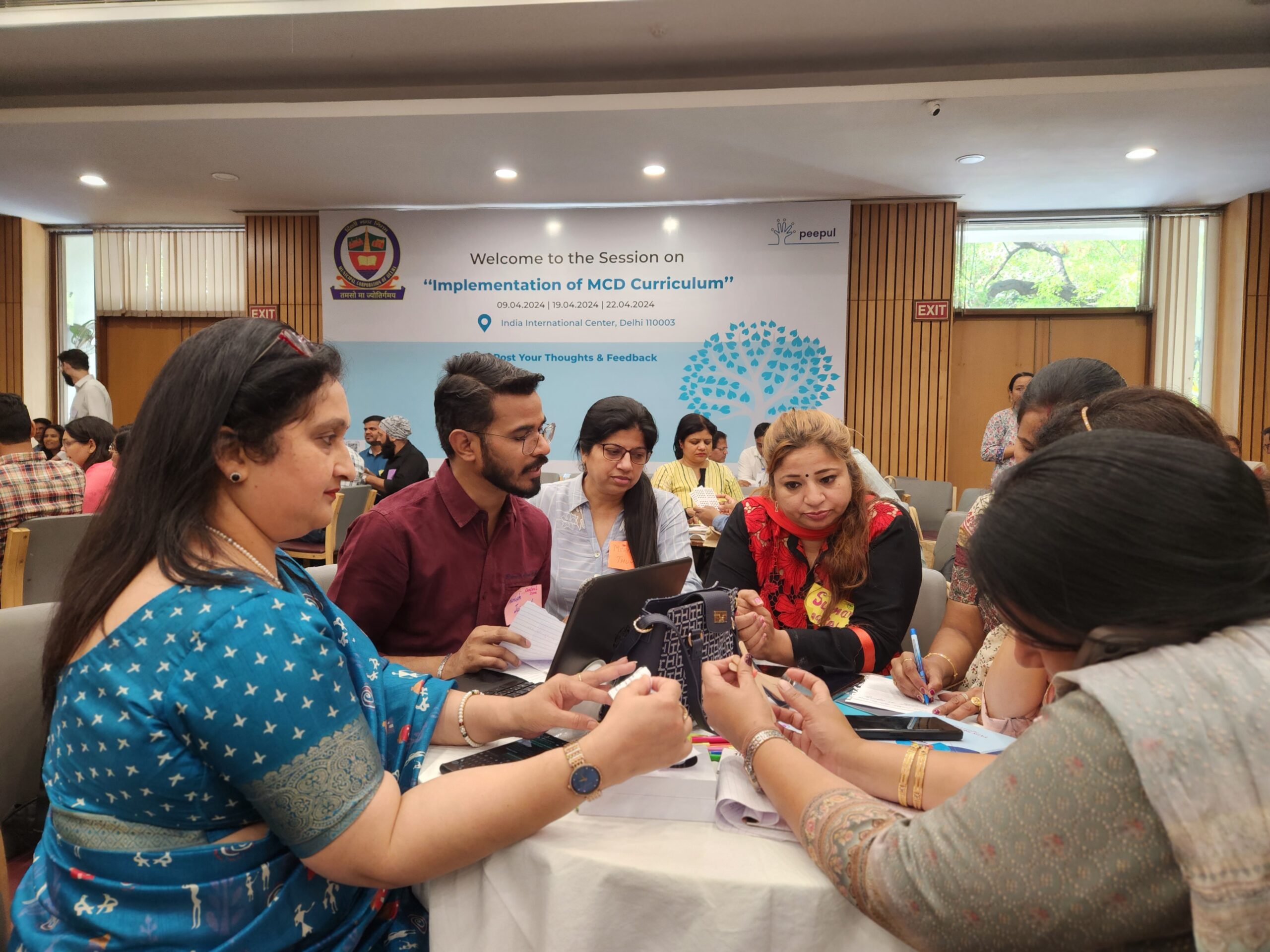
Organisations working on teacher capacity building know that training workshops are only one part of the process. Without support to transfer learning from training rooms to classrooms, in-service training hours mean very little.
When working at scale, professionals struggle with the sheer number of teachers they must support. They often have to choose reach over quality of support. In such a system, a middle layer is needed to provide the constant onsite support that teachers require to give their students the best learning possible. Fortunately, such a layer exists in the Municipal Corporation of Delhi (MCD) school system. “Mentor Teachers” are a cadre of teachers from within the system, chosen to visit their assigned schools and observe classes to coach their mentee teachers. Each mentor teacher is assigned around 10 to 12 schools on average.
Beyond classroom observation and coaching, mentor teachers are also expected to facilitate teacher upskilling sessions, in line with the 50-hour Continuous Professional Development (CPD) recommendation in NEP 2020. Existing discourse on cascaded training models shows that mentor teachers are best suited to conduct training sessions and provide continuous support for implementation. Mentors have been regular teachers themselves and interact regularly with their mentee teachers. This helps them understand the contextual realities and challenges of the system, reducing the disconnect often felt with an external resource person. Thus, the cadre of mentor teachers acts not only as training facilitators but also as academic coaches who provide continuous onsite support to teachers. This makes them essential agents for strengthening the system by improving teaching and learning in schools.
The Mentor Teacher Professional Development (MTPD) programme in Delhi works closely with the cadre of mentor teachers to strengthen their mentoring, coaching, and facilitation skills. This programme runs across all MCD schools. MCD has roughly 1500 schools spread across 12 zones in Delhi, covering approximately 1,480 kilometres. In such a widespread system, even coaches need continuous support and professional development to drive change in the classroom. The MTPD programme works with mentor teachers to help them identify academic support needs in their zones and address challenges by analysing data collected from classrooms.
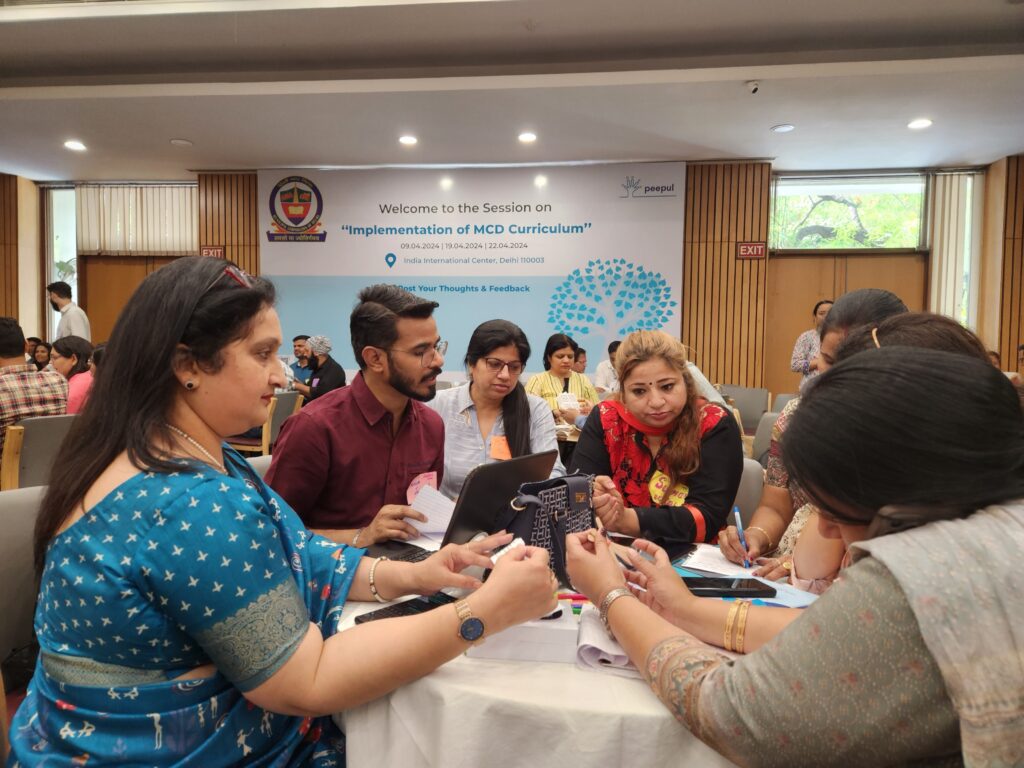
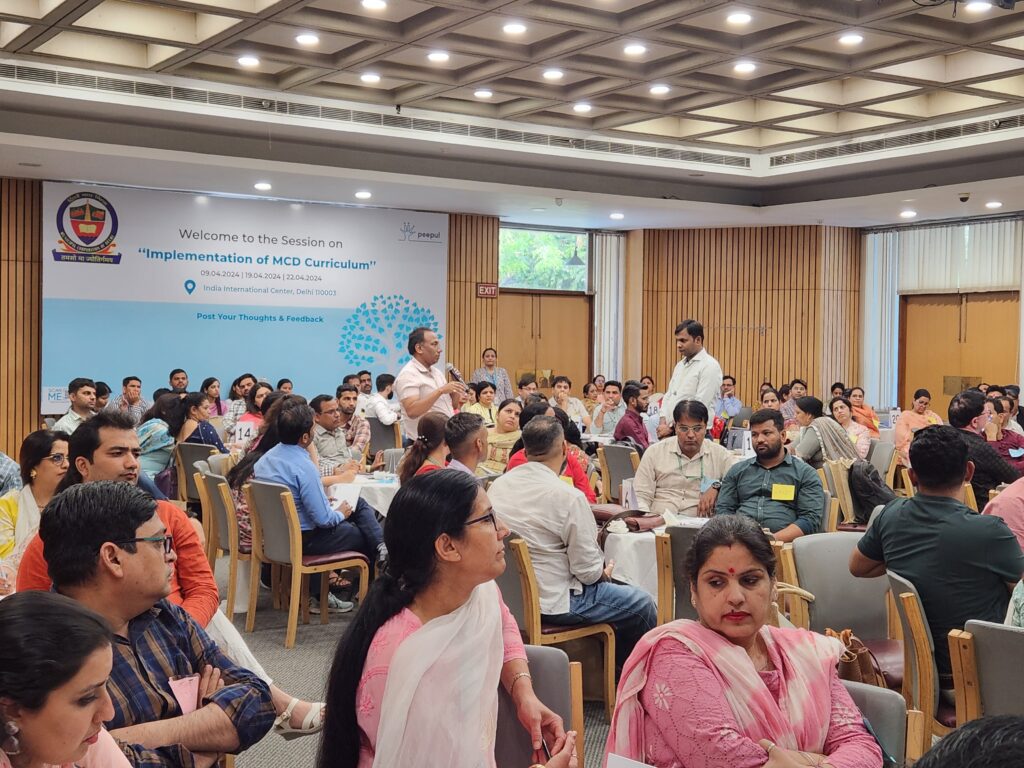
In 2024, we conducted a three-day capacity-building workshop with mentor teachers on FLN strategies, classroom management, and mentoring skills. After the workshop, mentor teachers conducted a two-day online cascade training with their teachers before schools reopened after the summer break. To support this process and ensure core objectives were covered across zones with minimal loss in translation, the Peepul team created sample training decks, session plans, and training resources for mentor teachers to use. Mentors still had the autonomy to adapt and tailor the sessions to their local context and needs.
It was equally important to capture participants’ knowledge scores to assess the effectiveness of the training and identify gaps that mentors could address with teachers through one-on-one conversations. We created assessment tools using Google Forms for teachers to fill in before and after the training. A total of 4789 teachers took part in the cascade training. Feedback showed that 99% of teachers who attended both days found the training content relevant to their classroom needs.
But classrooms keep evolving, and without implementation support that reflects current ground realities, even highly relevant training sessions fail to translate into learning. To keep coaching support intentional and aligned with current classroom needs, the Peepul team conducted joint observations with mentor teachers. This helped us understand how effective the model had been for classroom teaching and what new trends were emerging. We compiled the data from these observations and discussed it with mentors during “Data Discussion Meetings” at the zonal level. These meetings are solution-oriented and focus on common gaps observed across classrooms. We discuss these insights with mentor teachers and agree on how to support teachers on the gaps observed.
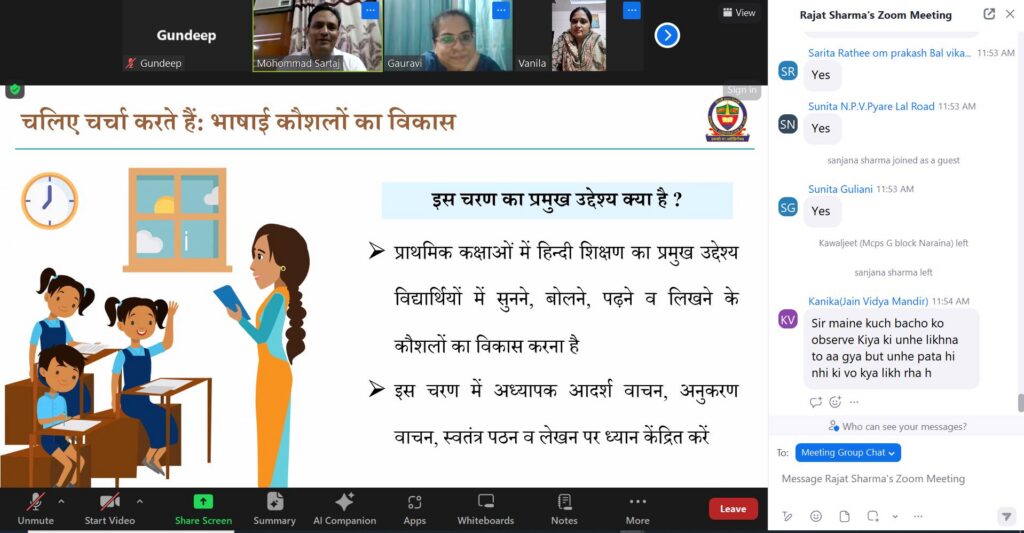
This cycle of training sessions, classroom visits, and data discussion meetings allows for continuous monitoring and improvement through a structured and intentional process.
Over the years, our classroom visits have shown higher adoption of student engagement techniques such as Check for Understanding and Student Practice. Thanks to constant coaching support from their mentors, teachers are now ready to receive more rigorous input on these techniques.
Peepul has worked in the public education system for over ten years. Though the ecosystem keeps shifting, we have realised that prioritising implementation and coaching support after training is the secret to making teacher training translate into classroom learning.
Ideally, refresher courses should be part of the cascade model. But when time does not allow for it, regular and consistent support to reinforce learning is the bare minimum. In the three years since we started working with mentor teachers, we have tried to find diverse ways for mentors to provide this support and reach educators and classrooms after cascade training.
This article is co-authored by Garima Nayak, Project Manager and Surbhi Nagpal, Programme Manager at Peepul working closely on our Delhi Scale Programme.