By Ankita Ghosh, Fellow (Gender), Peepul
Gender sensitisation is foundational to every child’s holistic development, not an optional extra. Children begin learning about gender long before they can name it. Through everyday interactions, they absorb messages about how boys and girls should behave, shaping their sense of self, relationships and perceptions of others. Yet these messages are not always free from stereotypes, and conversations about gender, bodies and relationships often go unaddressed at home and in school. Teachers, too, may lack the language and resources to respond confidently when these ideas surface in the classroom.
Gender sensitisation helps children and teachers positively shift stereotypes, understand differences, and practise respect and empathy through age-appropriate learning. Peepul is introducing these sessions with students, teachers and parents across three primary schools in Amar Colony, Lajpat Nagar and Jeevan Nagar, which are run by Peepul in partnership with the Municipal Corporation of Delhi (MCD). The first pilot, at Jeevan Nagar, offered an unexpected insight into children’s understanding of dignity and inclusion.
“Ma’am, hum unko didi-bhaiya bula sakte hain. Unko unke naam se bula sakte hain.” (“Ma’am, we can call them didi or bhaiya. We can call them by their name.”)
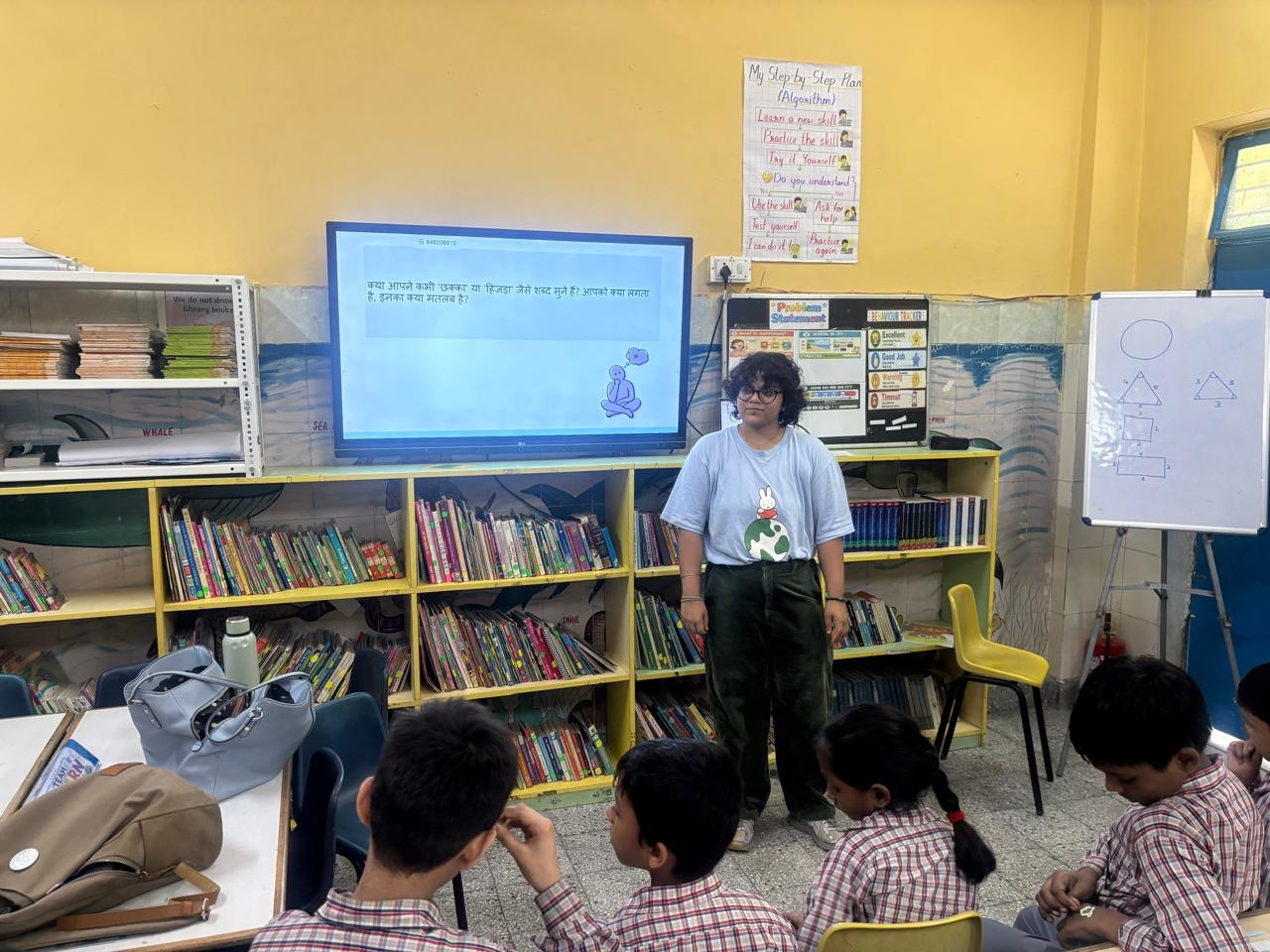
These words came from a Grade 4 student when children were asked what they could say instead of the hurtful slur “chakka”. Expecting them to use the term transgender, facilitators instead heard children suggest something simpler: address the person as didi, bhaiya or by their name.
That moment captured the potential of gender sensitisation: when children make sense of respect in their own words, it becomes something they can practise in everyday life. It also highlights why age-appropriate, culturally rooted Comprehensive Sexuality Education (CSE) belongs in primary education and foundational learning. CSE is not a conversation about sexual activity, nor a poster or lecture on “good behaviour”. It is an opportunity to learn about bodies, relationships, safety, equality and care (UNESCO, 2018; UNFPA, 2014).
The problem children are already living with
Children begin learning gender long before adults formally teach it: through household roles, playground language, media, community norms, and what schools sometimes unintentionally ignore (Connell, 2009; UNICEF, 2021). In February 2026, a Gender and Inclusion Audit across the three schools made this visible: children were frequently using disrespectful, derogatory and transphobic language, especially towards peers perceived as “different”, and showed limited sensitivity towards children with disabilities and additional learning needs.
These were not abstract concerns. They shaped whether children felt safe, seen and able to participate. If schools remain silent, children do not remain neutral; silence becomes a curriculum too. Childhood experiences of embarrassment, shame, rejection or public criticism can leave a lasting emotional imprint, particularly when adults or peers respond in ways that make a child feel humiliated, inadequate or unsafe.
What CSE offers when it is understood correctly
CSE is often misunderstood because adults hear “sexuality” and imagine content inappropriate for young children. But quality CSE is age- and developmentally appropriate learning about the cognitive, emotional, physical and social aspects of sexuality (UNESCO, 2018). For younger children, this means learning that bodies are different, feelings have names, care work is valuable, no one deserves to be mocked, and safety begins with respect for oneself and others.
In Jeevan Nagar, this translated into four 40-minute sessions with 15 Grade 4 students, held every Wednesday (Wise Wednesday, a bagless day) over a month, and two sessions with parents. The group was kept small so facilitators could hear every child and respond to hesitation. The sessions moved gradually: distinguishing sex as linked to the body from gender as shaped by society; unpacking stereotypes; examining the division of work at home and at school; and using real-life scenarios to discuss masculinity, femininity, fairness, respect and inclusion.
The pedagogy: not depositing answers, but creating dialogue
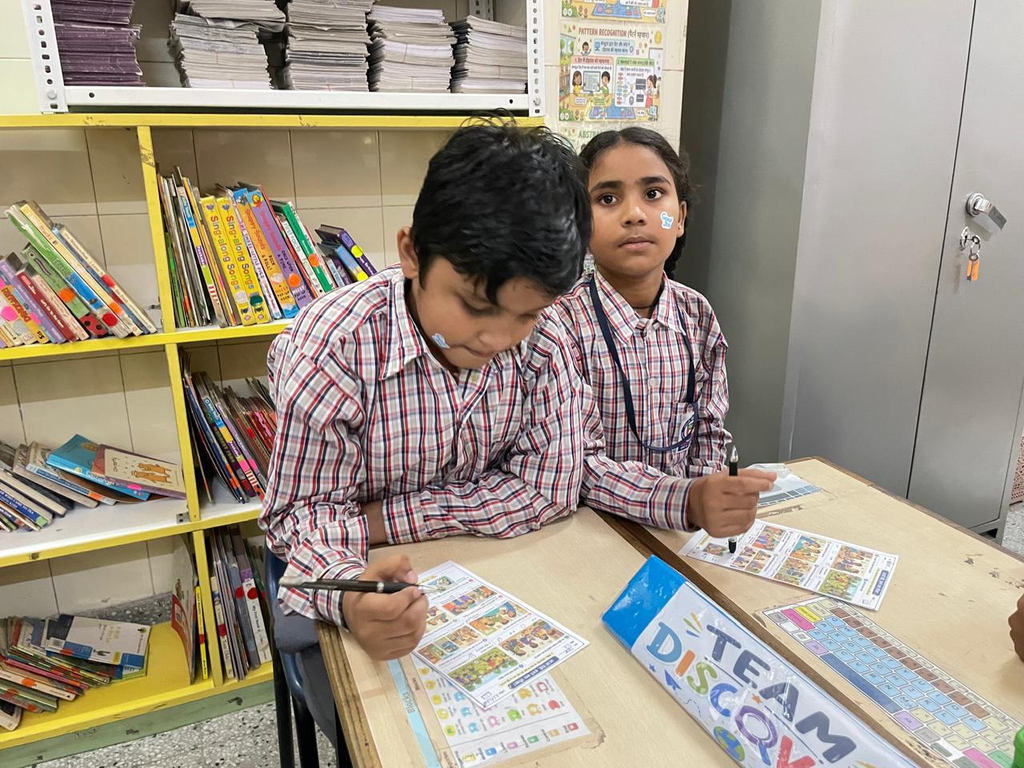
The approach mattered as much as the content. Sessions used visual cues, games, drawing, guided conversations and scenarios so that children with different learning paces could participate. With parents too, facilitators avoided text-heavy material and used discussion, images, and reflection drawn from everyday life. The aim was not to “correct” children and communities from the outside, but to create conditions in which they could examine familiar ideas differently.
This is where Paulo Freire’s Pedagogy of the Oppressed is useful. Freire argued against a “banking” model of education, in which teachers deposit knowledge into passive learners, and advocated problem-posing education rooted in dialogue, lived experience, reflection and action (Freire, 1970). In gender and inclusion work, children cannot simply be told to be equitable; they need to notice how inequity appears in their own world and practise alternative ways of relating.
bell hooks’s Teaching to Transgress extends this through engaged pedagogy: classrooms where students are active participants and learning connects to lived realities (hooks, 1994). In the pilot, a child’s phrase, “call them by their name”, was not a distraction from the curriculum. It became the curriculum.
Teacher preparation was an important part of this approach. Many teachers were initially hesitant to facilitate sessions on topics they understood as taboo, shaped by the same social conditions that make conversations about bodies, gender, consent and identity difficult in homes and schools. Training sessions created space to unpack this discomfort. The emphasis was on helping teachers see that children are already exposed to these ideas through language, media, peers and community interactions. The question is not whether they will learn about gender and identity, but whether schools will give them respectful, age-appropriate vocabulary and a framework for accountability.
These sessions also shifted the role of the teacher from moral policing to facilitation. Simply telling a child that a slur or behaviour is “wrong” is rarely enough. Teachers discussed how to explain why language can hurt, how to offer the correct vocabulary, how to introduce consent and boundaries for themselves and others in child-friendly ways, and how to help children understand that respect is not only an adult instruction but their own responsibility. Once children have been supported to understand what is respectful, they can also be held accountable for their actions. The training itself became dialogic: teachers shared how they had handled similar moments in classrooms, reflected on what worked, and learnt from one another’s practices.
What the baseline and endline showed
The pilot used a baseline-endline tool combining structured questions with open-ended reflections.
At baseline, most students could already identify some stereotypes as socially constructed: 13 of 15 classified “Boys don’t cry” and “Girls can’t be good ministers” as gender, and 12 of 15 classified “Boys should not do housework” as gender. Statements about bodies were less clear, showing the need for careful, age-appropriate vocabulary.
At endline, the responses showed attitudes being applied to everyday situations. All 15 students disagreed that only girls can play with dolls, said football should be open to whoever wants to play, and recognised both household and outside work as important. Fourteen of 15 said every family member can care for children. When asked what to do if someone is teased because of their identity, 12 chose a respectful response: tell others not to call names and to speak respectfully.
The children’s own words were even more telling:
“Kisi ka bhi mazak nahi udana chahiye.” (“We should never make fun of anyone.”)
“Ladke bhi makeup kar sakte hain.” (“Boys can wear makeup too.”)
“Maine yeh shabd seekhe: ling, gender, transgender.” (“I learnt these words: sex, gender, transgender.”)
One child drew a boy with long hair and a girl with short hair. These are small sentences and small drawings, but they mark the beginning of a different social imagination.
Why small groups, local language and community matter
The pilot offers three lessons.
First, small groups matter. Gender norms rarely shift through announcements; they shift through sustained, participatory, emotionally safe conversations where children can ask, hesitate, laugh, correct themselves and try again.
Second, local language matters. Terms like transgender are important, but vocabulary becomes meaningful when children connect it to everyday practices of respect: not mocking someone, sharing work at home, letting anyone play football, and calling a person by their chosen or familiar name. This also meant normalising words such as gay, transgender and queer, not as extraordinary or “othering” labels, but as ordinary vocabulary that helps children describe the world respectfully. Vocabulary was not treated as a list to memorise; it was treated as a tool for dignity.
Third, parents and communities matter. Parent sessions began partly as a way to build support but became a space for adults to reflect on biases passed on at home and to share lived experiences from the community. Some parents spoke of kinnars as part of family and community life, showing why sensitisation must be grounded in local realities rather than imported as abstract theory.
The case for gender sensitisation as foundational education
Gender sensitisation is often treated as an “add-on” to learning outcomes. The Jeevan Nagar pilot suggests the opposite. A child who believes some peers deserve ridicule is also learning who belongs, who speaks, who stays silent and who withdraws. These beliefs shape participation, relationships, safety, aspirations and self-worth, and can have a lasting influence on adult lives.
Education for equality is therefore not separate from educating well. Freire would call this education through dialogue and reflection; hooks would call it “the practice of freedom”. In school terms, it is the difference between a child memorising “be kind” and a child deciding, in a real moment, not to laugh when someone is mocked.
From pilot to practice
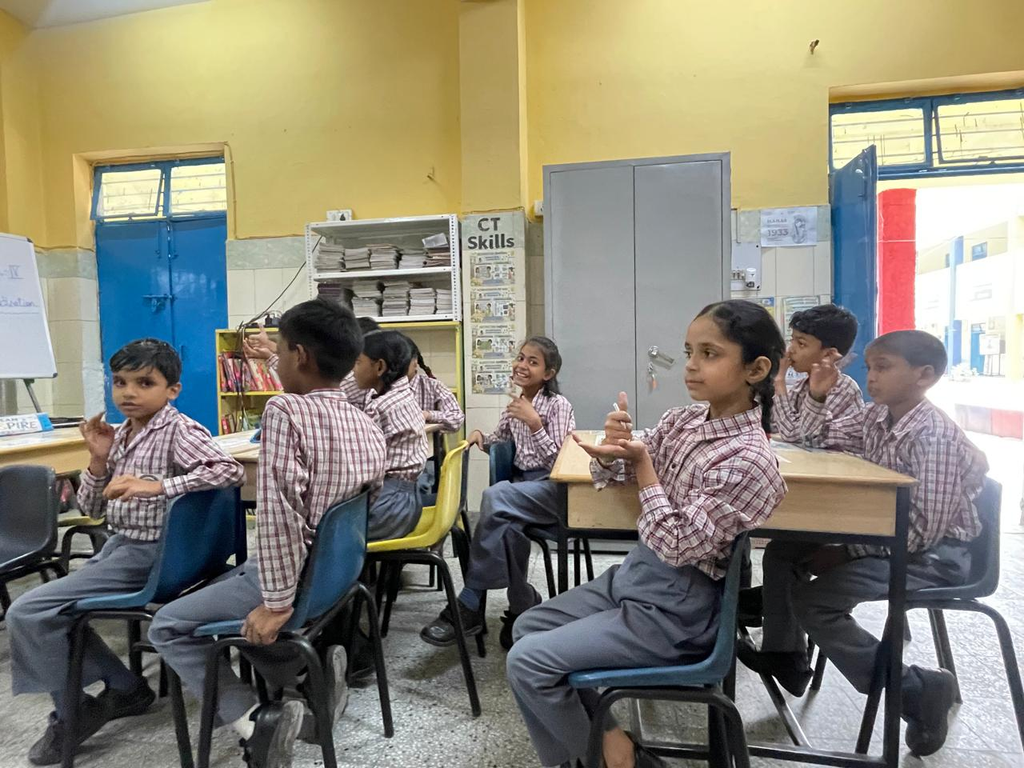
Fifteen children over one month cannot, by themselves, prove long-term norm change. But the pilot shows what becomes possible when schools create structured, age-appropriate spaces for conversation; when facilitators use play, pictures, stories and scenarios; when parents are engaged; and when evidence is gathered through both survey responses and children’s own words.
Based on this learning, the four student modules and the parent module will be consolidated across the three schools, delivered during Wise Wednesdays (bagless days) in Grades 4 and 5, built into the academic calendar, and repeated annually. The crucial condition is capacity-building. Gender Focal Points (Peepul’s staff volunteers in the three schools), class teachers and community officers need support not only on content but on facilitation: how to respond to children’s questions, how to explain boundaries and consent, how to address harmful language without shame, and how to create conversations where children can reflect and take responsibility.
The Grade 4 child who said “call them by their name” offered more than a polite alternative to a slur. They offered a theory of education: respect becomes real when children can practise it in the language of their own lives. That is the promise of gender sensitisation and CSE in schools: not only to inform children, but to help them make classrooms safer for everyone.
References
Butler, J. (2004) Undoing Gender. New York: Routledge.
Connell, R. (2009) Gender: In World Perspective. 2nd edn. Cambridge: Polity Press.
Freire, P. (1970) Pedagogy of the Oppressed. New York: Herder and Herder.
hooks, b. (1994) Teaching to Transgress: Education as the Practice of Freedom. New York: Routledge.
UNESCO (2018) International Technical Guidance on Sexuality Education: An Evidence-Informed Approach. Revised edn. Paris: UNESCO.
UNESCO (2021) The Journey Towards Comprehensive Sexuality Education: Global Status Report. Paris: UNESCO.
UNFPA (2014) Operational Guidance for Comprehensive Sexuality Education: A Focus on Human Rights and Gender. New York: United Nations Population Fund.
UNICEF (2021) Gender Socialization During Adolescence in Low- and Middle-Income Countries: Conceptualization, Influences and Outcomes. UNICEF.