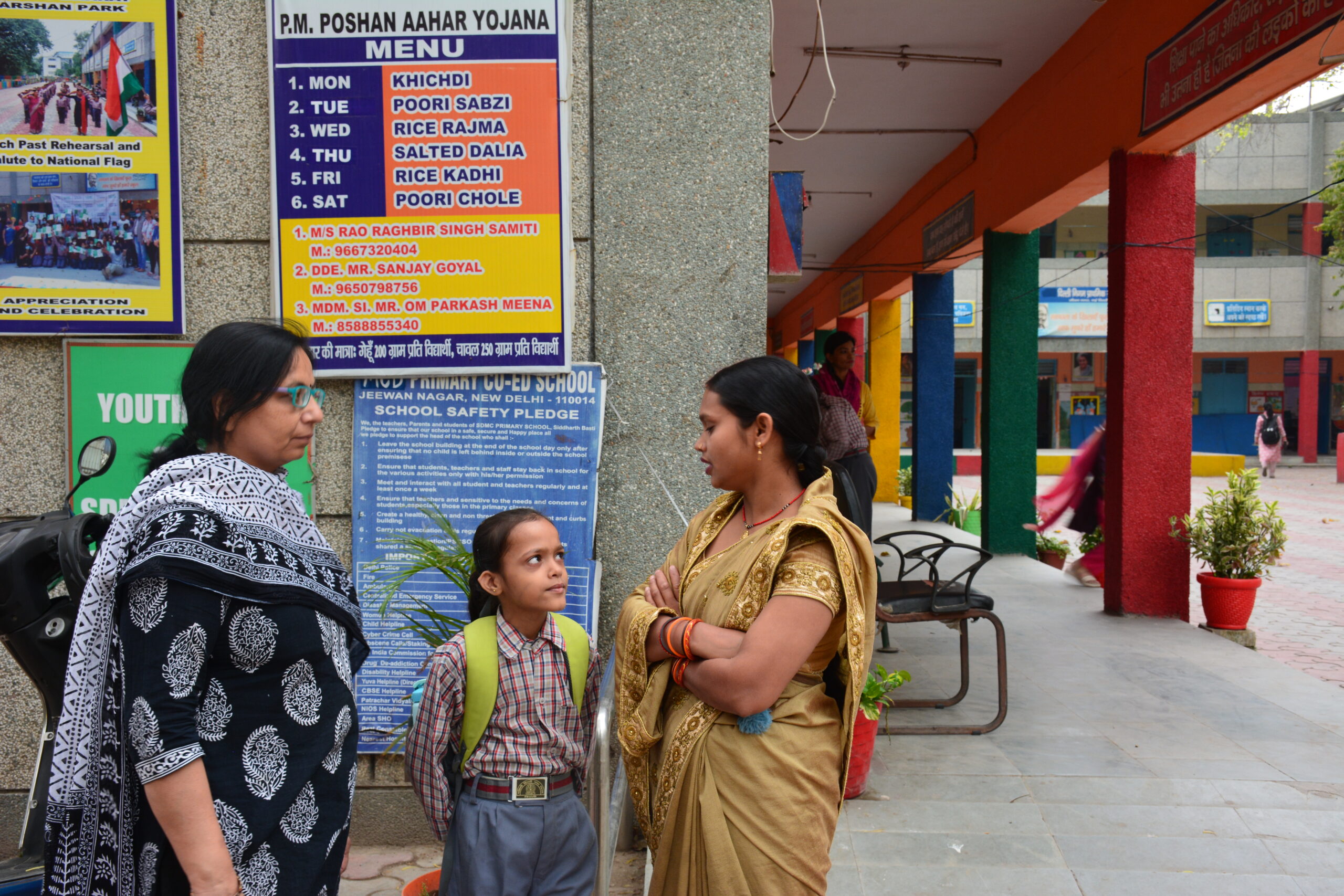
Before a child steps into the classroom, learning has already begun. Education often begins for the child without textbooks and teachers, from a mother who often didn’t get the opportunity to complete her own education.
In many low-income households across India, especially among families relying on government school education in India, mothers quietly take on the role of a child’s first and most consistent educator. They wake children up for school after long nights of work, remind them to revise lessons they themselves may not fully understand, and insist on attendance even when financial pressures pull in the opposite direction.
Research by the National Library of Medicine shows that when mothers are actively involved in their child’s early learning, children develop stronger social skills and display fewer behavioural issues. This highlights how a mother’s role goes far beyond basic care; she shapes how a child interacts with the world.
This Mother’s Day, instead of celebrating motherhood in the abstract, it’s worth asking a sharper question: What can we learn about education by looking at mothers who were never formally educated but are still raising learners against all odds?
This everyday resilience reflects how families are quietly transforming lives through education, even in the most resource-constrained environments.
Because in many ways, they are not just supporting education. They are sustaining it.
The Daily Push- Choosing School Over Survival
For many families dependent on government schools, sending a child to school is not a simple routine; it is a daily decision weighed against survival. In low-income households, especially in urban settlements of Delhi and rural districts of Madhya Pradesh, mornings often begin with a trade-off: Should the child attend school, or help supplement the family income?
This is where mothers step in, not as passive caregivers, but as active decision-makers shaping their child’s educational journey. Mothers negotiate with employers, adjust domestic chores, and sometimes sacrifice daily wages to ensure their children attend school. This reflects the powerful role of parents in children’s learning, especially in environments where systemic support is limited.
According to the Ministry of Education, early childhood education in India is critical for building foundational literacy and numeracy, which directly influence future learning and development. While regular school participation plays an important role, it is often sustained not just by policy but by parental insistence, especially from mothers.
In many communities supported by Peepul, engagement programmes have revealed a consistent pattern: Even when fathers migrate for work or remain disengaged, mothers become the anchor, ensuring continuity in education. Their contribution is not visible in report cards or school metrics, but without it, those metrics would not exist.
Why Education Systems Overlook Mothers’ Role
India’s education policies have made significant strides in expanding access. However, they often overlook a critical force driving foundational learning development for mothers.
Most education frameworks focus on infrastructure, curriculum, and teacher training. While these are essential, they rarely account for the parenting and education impact happening inside homes. This gap becomes even more pronounced in low-income communities, where mothers may not be literate but are deeply invested in their children’s progress.
At the same time, data shows a quiet shift. The Annual Status of Education Report (ASER) highlights that the proportion of mothers with children aged 4–8 who have studied at least up to Grade 5 has increased from 35% in 2010 to nearly 60% in 2022. This indicates that while maternal education levels are improving, their role in learning is still largely unrecognised within formal education systems.
Where the Disconnect Lies?
| Area of Focus | System Approach | Ground Reality in Low-Income Households |
| Learning Support | School-based instruction | Reinforced at home by mothers |
| Homework Completion | Assumed student responsibility | Monitored and enforced by mothers |
| Attendance | Policy-driven tracking | Driven by parental persistence |
| Early Learning Foundations | Pre-primary and Anganwadi systems | Informally built through home routines |
| Parent Engagement | Limited to PTA meetings | Daily, informal, and continuous at home |
This disconnect creates a blind spot. While systems measure inputs within schools, they miss the ecosystem of community-based education that exists outside classrooms.
Real Stories from Delhi and Madhya Pradesh
Behind every statistic is a story, and across Peepul’s intervention areas, these stories reveal the quiet determination of mothers as first teachers.
In a neighbourhood in Seemapuri, Delhi, a mother of two has found her own way of staying involved in her children’s education. Though she cannot read or write, she asks her children to “teach back” what they learned in school each day.
If they hesitate, she knows something is incomplete. Over time, through regular community engagement sessions, she began attending school meetings and gradually built the confidence to speak with teachers, something she once found intimidating.
“I can’t read what’s written in their books,” she says, “but I know when they haven’t understood something.”
In parts of rural Madhya Pradesh, where seasonal migration often disrupts schooling, another mother made a different choice. Despite financial pressure, she stayed back so her children could continue attending school.
With guidance from community programmes, she started supporting her child’s learning through simple practices like listening, repetition, and encouragement. Slowly, her child’s reading began to improve.
These are not isolated cases. Data from national surveys consistently highlight that children with engaged parents, regardless of parental literacy, perform better in basic reading and arithmetic.
This reinforces a crucial insight: Foundational learning development is not limited by a mother’s education level; her involvement strengthens it.
When Mothers Are Supported, Children Learn Better
If mothers are already playing such a central role, the next question is simple: What happens when they are supported?
| Intervention Type | Outcome on Children’s Learning |
| Parent engagement sessions | Improved attendance and participation |
| Home-based learning support | Better reading fluency and comprehension |
| Mother-led monitoring | Higher homework completion rates |
| Community learning ecosystems | Stronger retention and reduced dropouts |
H2: This Mother’s Day: Recognising the First Teacher We Never Counted
This Mother’s Day, recognition must go beyond celebration. It must acknowledge the mother who cannot read but ensures her child learns, who chooses school over immediate income, and who sustains education through everyday effort. Strengthening education means strengthening her role.
Peepul is demonstrating that when mothers are engaged, learning outcomes improve, not just in classrooms, but across communities.
If you want to be part of this change, consider how you can donate for education in India and support initiatives that empower families alongside schools.
Because the first teacher a child has is still the one we invest in the least.
Sources:
National Library of Medicine
https://pmc.ncbi.nlm.nih.gov/articles/PMC2973328/#abstract1
Ministry of Education – NIPUN Bharat Mission
https://www.education.gov.in/en/nep/understanding-FLN
ASER Data 2022