The Power of the Circle
At Sandipani Vidyalay (SV) Gairatganj, the hallways were busy, but the staff room was quiet. With a large team of educators, communication had become purely functional. Teachers were working in silos, rushing from one class to the next, carrying heavy workloads and the silent weight of burnout.
Mr. Sunil Kumar Rajak, the school’s Principal, watched this growing disconnect with concern. He knew that a school is only as strong as the bond between its teachers, which could eventually affect his classrooms. He realised that his teachers didn’t need more meetings; they needed a space to breathe and be heard.
The Problem: A Culture of Silos and Stress
The challenges were clear. Teachers felt unheard, and junior staff often felt too intimidated by hierarchy to share their struggles. The school had plenty of “updates” but very little “connection.” Mr. Rajak recognised that if he didn’t act, the mounting stress would eventually dim the spark his teachers brought to their students.
The Solution: Designing a Safe Space
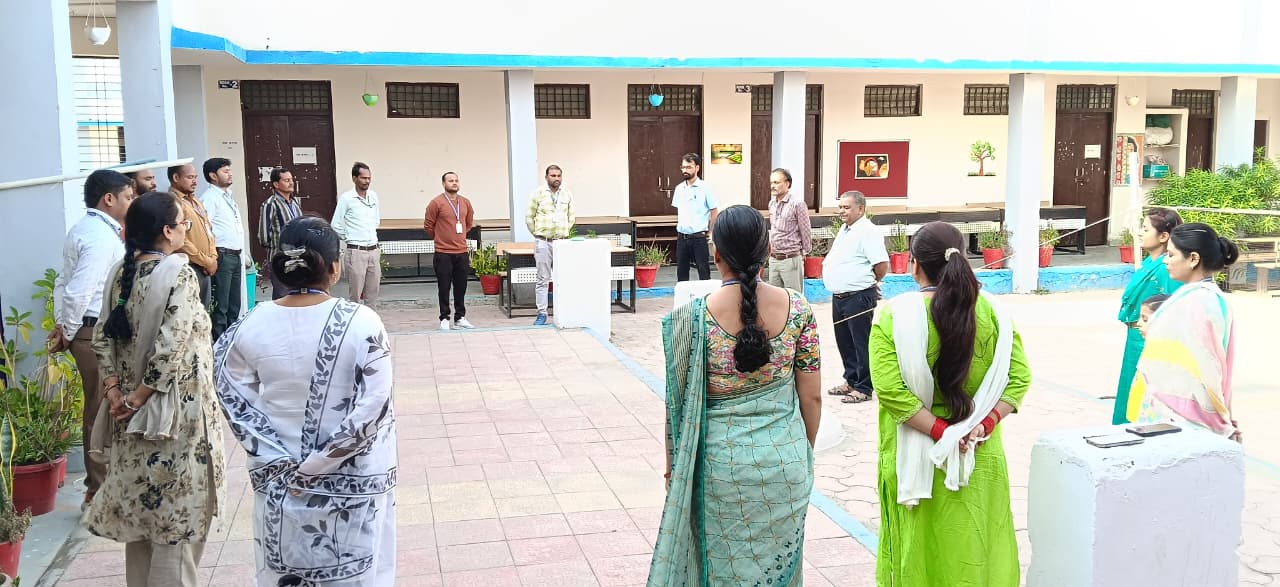
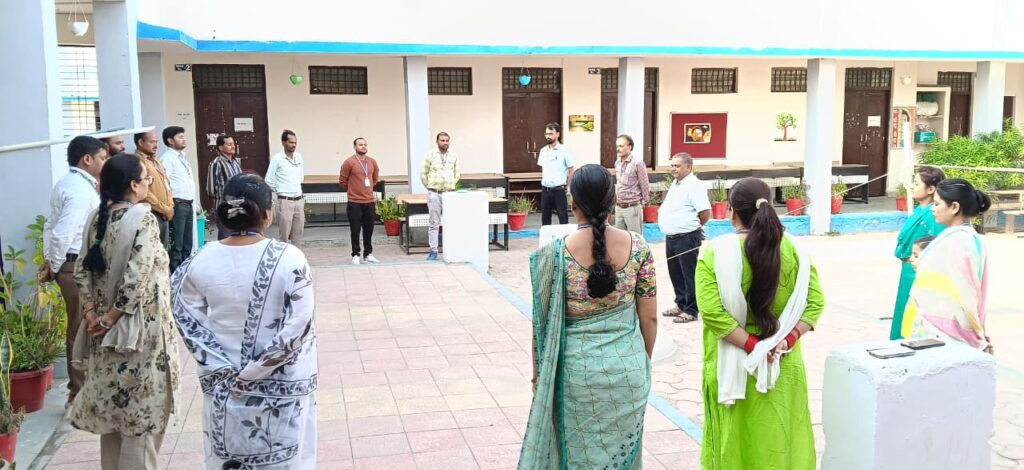
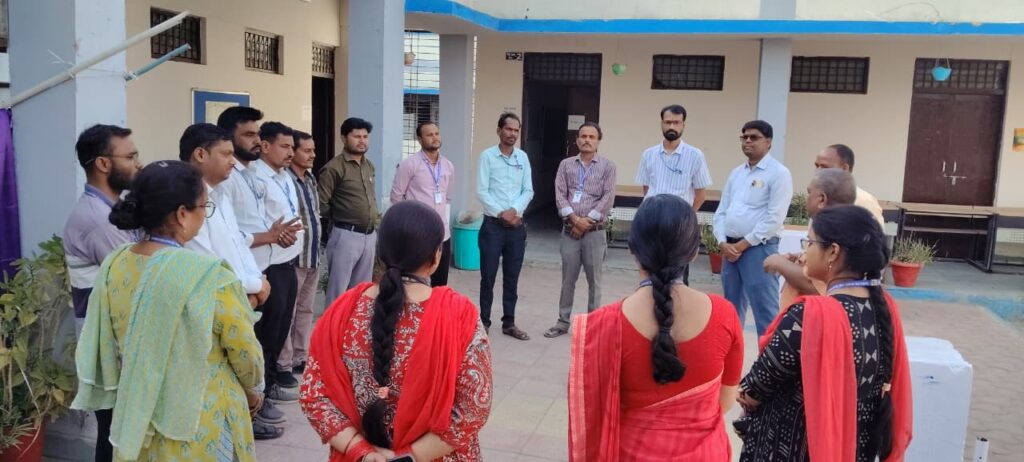
Designed and supported by Peepul, Mr. Rajak introduced Circle Time. It wasn’t a formal briefing or a lecture; it was a daily 15-minute practice with the entire staff standing together in a physical circle. Beginning on a positive note, often with a light, energising activity, Circle Time brought the School Leadership Team, teachers, and other staff into one shared space as one team. It was led voluntarily by staff on a rotating basis, giving everyone a chance to share their experience.
The principal knew that for this to work, he had to lead by example. He faced three main hurdles:
- Time: To ensure it didn’t feel like a “burden,” he smartly carved out the last 20 minutes of the school day for this “refreshment break.”
- Hierarchy: By standing in a literal circle where everyone was at the same level, he visually dismantled the barriers between senior and junior staff.
- Vulnerability: When teachers were hesitant to speak, Mr. Rajak and his senior leads went first, sharing their own professional challenges. This showed the team that it was safe to be honest.
The Result: From Isolation to Innovation
The transformation was gradual but profound. What started as a simple check-in – “How are you feeling today?” – blossomed into a powerful engine for school improvement.
The “Circle” became a healthy outlet for emotional release, significantly reducing teacher fatigue. As trust grew, so collaborated. Teachers who once felt alone realised their colleagues were facing the same hurdles.
Perhaps the most exciting outcome was the spontaneous peer learning. Teachers began sharing classroom wins – like teaching mathematics through games, use of TLM, hook etc. Other teachers would listen, adapt, and try these ideas in their own rooms the next day.
The school in Gairatganj and close to 50% of other SV schools in Madhya Pradesh after having adopted Circle Time as a regular practice, today, are more than just a workplace; they have transformed into supportive communities. By prioritising the emotional well-being of his team, Mr. Sunil Kumar Rajak didn’t just solve a coordination problem – he restored the heart of his school. Guided by Peepul’s framework, he proved that 15 minutes in a circle can change the trajectory of an entire academic year.
This article is authored by Vivaksha Vats, Project Associate, PMU | Field Story by Bhagyashri Nimbekar, Project Associate, Capacity Building Team at Peepul working closely on Sandipani Schools in our MP Programme Team.